Random Acts of Kindness Ideas for the Classroom

Random Acts of Kindness Calendar for September 2022

Incorporating kindness activities into your back to school lesson plans is one of the most important things you can do to build classroom community and practice positive classroom management!  Rather than spending your days redirecting and reacting to behaviors, you can build connections with students by encouraging kindness in the classroom. One of the best ways to do this is to MODEL kindness and help your students find ways to be kind themselves.

A fun way to start of the school year is to do a Random Act of Kindness every day. I created this FREE calendar for September 2022, with ideas for random acts of kindness acts that you can do with your students in the classroom, as well as simple kindness acts they can do on the weekends too! 


You can display the full color version in the classroom:
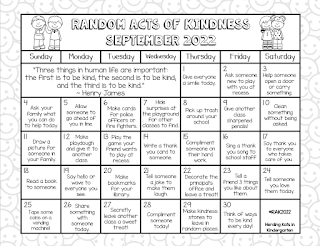
Or send home this b&w version so students' families can follow along at home!

Either way you choose, these simple (and affordable) ideas will soon have your students thinking about ways they can kind every day! 

Here are some links and ideas for the acts marked with a red *:

September 12th: Check out my Pinterest Play Dough Board for recipe ideas for the homemade play dough. The apple pie play dough is perfect for September!

September 20th: If you need a quick way to make bookmarks for your library, check out my Pinterest Free Bookmarks Board for lots of FREE, fun options! Just print your choice, and then have students color and cut out!

September 29th: Kindness stones are so fun to make - in the classroom, I paint the rocks a solid color with acrylic paint (available in any Hobby store) and then let students write positive words, flowers, hearts and stars on them with paint markers or Sharpies.
Or join the #share100smiles movement by painting happy faces on your rocks!

You can also check out these fun resources in my TPT store to help spread the kindness even further!

FREE Kindness & Character Songs Songs & Chants to Teach Kindness & Character Traits - 8 easy-to-sing songs for teaching kindness, respect, honesty, manners, and fairness. Use these songs during your morning meeting and throughout your day to help build your classroom community!

Spud-Tastic Behavior Management System - this system makes positive behavior management EASY and FUN! Students will love building a Potato Head by following the classroom expectations!

And nothing makes a kindergarten student happier than their name - seeing it on a First Day of School crown will start their year off right!

Have a Back to School season everyone and remember, kindness is free - sprinkle it everywhere!

Name Practice Activities for Kindergarten

What's in a Name? 

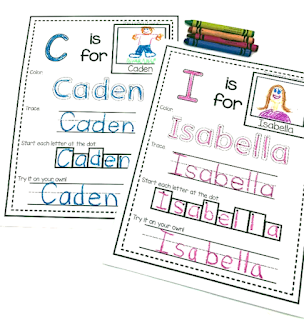
A lot! In fact, names are one of the first ways that children are exposed to letters and sounds! Name practice activities can be an engaging and easy way to teach children letter recognition while at the same time helping them work on the important skills of recognizing and writing their own name. It’s important to teach children how to write their names correctly as the first step towards developing writing skills. Being able to recognize and write their name helps to build confidence and self-esteem as well as improve their fine motor skills. Whether for preschool or for kindergarten, name activities are an important part of the first weeks of school! 

When I teach letters and sounds, I try to make it personal for my students. We start with names because learning the letters of their name and their friends' names is very motivating to students. 

Starting on the first day of school, I use a personalized crown for each student:

Coloring their name hat is a fun activity for my students, and gives me a few minutes when everyone is sitting and coloring so that I can speak with any parents in the room, do attendance and lunch count and then take a few moments to touch base with individual students as they finish their name crown. Bonus: since they're wearing their names on their foreheads, I learn their names a lot faster! 

There's nothing like play dough for engaging students AND strengthening fine motor muscles! 


But, many students have to be taught how to manipulate play dough - rolling it into balls, stretching it into snakes. These editable name mats give students practice with rolling and stretching the play dough before they use it to spell out their names. Students will stay engaged longer and work their finger muscles more! 


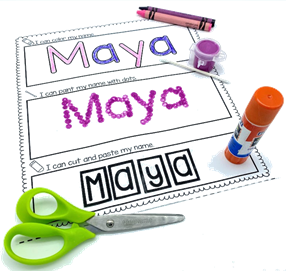
Next, students have to practice forming the letters of their name correctly. Using a variety of tools helps to keep students engaged! Whether its dry erase markers, crayons, paint or cutting out and manipulating letters, the more novel ways you can find for students to practice tracing their names the better!


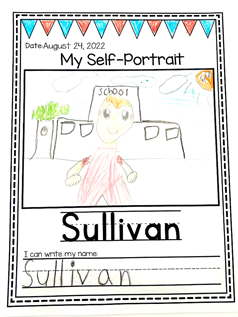
And what better way to show student progress in both writing and drawing than with Self Portraits? I have students make a monthly self portrait and then bind them together at the end of the year for their parents to see how far they've come over the school year! It's amazing to see the growth in their handwriting and drawing skills!

The best thing about all of these name activities is that by entering my list of student names just once, all of these activity pages autofill with the names! It takes me less than 5 minutes to type in my class list and then I can hit print! 

These name practice activities will help your students learn how to write their names in fun and engaging ways, while building fine motor muscles and self-confidence!

Using Sound Boxes in Kindergarten

Using Elkonin Boxes for Small Group Reading

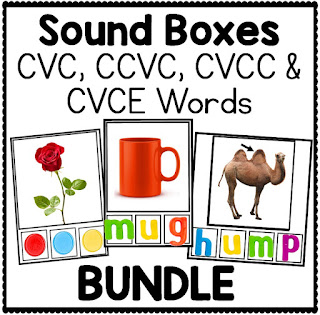
Hello everyone! I began dipping my toes into the Science of Reading last summer. I knew there had to be a better way to help my kindergarten students learn to read - and there is! I've been working hard to incorporate more phonemic awareness activities (Heggerty is AMAZING!) and more phonics activities (Decodables for the win!). One thing that really helped my students this year is using Sound Boxes. These are also called Elkonin boxes, but that's a big nonsense word for a kindergartner, so we just call them Sound Boxes. 

How do we use sound boxes? When we are just starting out, learning to segment sounds orally, we use our sound boxes with colored chips. I give each student 2 colors - one color for consonant sounds and another color for vowel sounds. We segment the word orally, pushing a chip forward for each sound. For example, "fan" would be /f/ /a/ /n/ and we would push forward 3 chips. then we tap each chip in turn, saying the sound that it represents again:  /f/ /a/ /n/. And then, we swoop our finger from left to right and blend the sounds back together to say the whole word: Fan!

Once we know how to orally segment words into individual phonemes, and we have a good grasp of letter-sound correspondence, we move from using colored chips to using plastic letters! I like to use Learning Resource's lacing letters because there's 275 in a pack so I have enough for everyone in my small group, plus they're all lower case!


We follow the same steps as before - orally segmenting the word and counting the sounds. Then we say each sound separately and identify it "Bug, /b/ /u/ /g/. The first sound, /b/, is spelled with a b. The second sound /u/ is spelled with a u. The last sound, /g/ is spelled with a g." Once we have each letter on the card we say the sounds again and blend them together to make the word: Bug!


This has been amazing for my students - not only for their reading, but for their writing too! Being able to segment and blend phonemes is a foundational skill for both reading and writing - and its amazing when you can hear students doing it independently, whether while writing in their journal or while reading a Mo Willem's "Elephant and Piggie" book from our classroom library!

And the best part? When we use REAL PHOTOS, we are building our vocabulary! This is especially powerful for my English Language Learners! I don't know about you, but a lot of times I am puzzled by clipart, but there's no guesswork when using photographs! 
And of course, you don't stop at CVC words! You can use sound boxes for CCVC and CVCC words too!

But wait, what about CVCE words?? Yep, sound boxes are effective for those words too!


We use the same familiar process - segmenting each sound and then representing them with either chips or letters. Since the "e" is silent, it doesn't get its own box, but instead snuggles in next to the last consonant. This year, after using the sound boxes, it was so much easier for my students to remember to read the long vowel sounds in CVCE words correctly and to use the silent e in their writing.

If you're interested in trying out sound boxes in your  classroom, you can grab the bundle with CVC, CCVE, CVCC & CVCE Words here:


Popular Posts